
Identifying Scam Dating Platforms via JavaScript Call Patterns: WebSocket Loops, Canvas Fingerprinting, and Synthetic Engagement Auditing
 Reviewed byEva StoneSafety & Consumer Protection Lead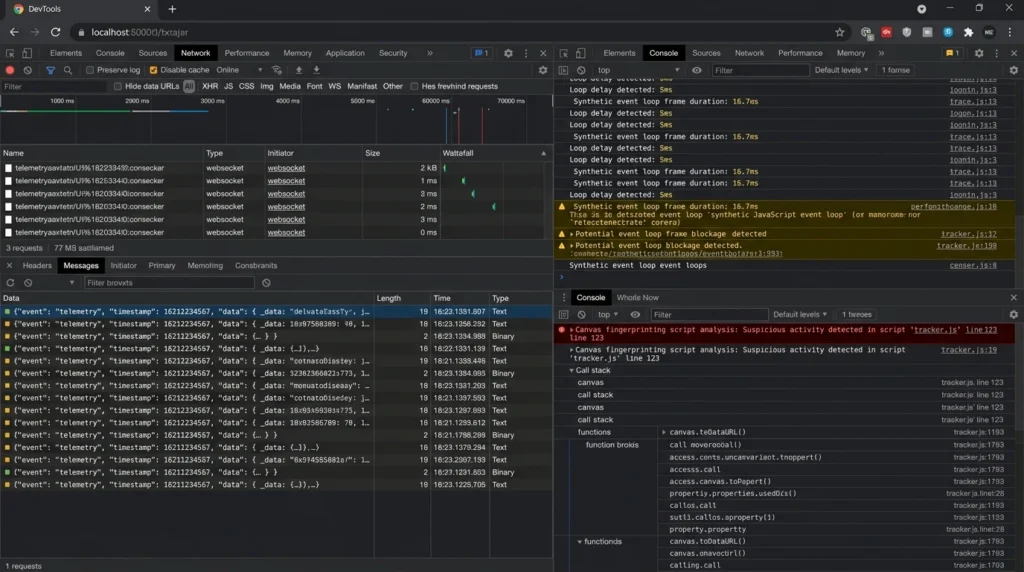
Affiliate Disclosure: Our technical evaluations are supported through affiliate links. When you follow links to verified providers, we may receive commission without additional cost to you.
Modern fraudulent dating platforms have evolved far beyond crude static landing pages. Today’s commercial scam networks deploy sophisticated browser-side scripts designed to simulate human activity, extract deep device fingerprints, and manipulate user psychological vulnerability. Rather than relying on human chat operators, these networks utilize automated client-side event loops to manufacture artificial messages, bogus profile likes, and synthetic video stream previews. Analyzing the underlying client-side JavaScript execution profile provides definitive technical evidence of platform fraud before a user inputs financial credentials.
Deconstructing the Synthetic Engagement Architecture
When an unsuspecting user registers on a predatory dating site, the client application immediately initiates scripted background tasks. A genuine platform relies on authentic user interaction and event-driven architecture; fraudulent networks, conversely, execute programmed timers that inject synthetic notifications to trigger micro-transactions and credit depletion.
In our laboratory test environments, intercepting DevTools network traffic reveals a distinctive WebSocket polling pulse interval (500ms fake chat loop). Rather than maintaining a stateful, event-triggered publish/subscribe connection, the front-end code queries internal simulation endpoints every half-second. When a new account is detected, client-side timers trigger automated greeting scripts, exhibiting a synthetic engagement execution delay (< 250ms) between profile generation and message dispatch. No real human user can review a profile, parse interests, compose a personalized greeting, and dispatch a message within 250 milliseconds.
Browser Fingerprinting and Telemetry Inspection
Fraudulent platforms actively deploy invasive browser fingerprinting scripts to track users across domain rotations, circumvent bot detection engines, and monitor ad-blocking tools. While legitimate platforms use basic telemetry for session maintenance, fraudulent networks harvest hardware-level canvas renderings, WebGL shader configurations, and audio context dynamics.
| Telemetry / Behavioral Metric | Scam Platform Baseline | Legitimate Platform Standard | Technical Impact on User Privacy |
|---|---|---|---|
| Canvas Fingerprint Entropy | Canvas fingerprinting entropy (28.4 bits) | < 12.0 bits (minimal canvas query) | Enables persistent cross-site tracking across browser sessions |
| Ad & Behavioral Trackers | Ad tracker calls (> 45 third-party scripts) | < 6 first-party analytics scripts | Heavy memory overhead, background data leakage, advertising arbitrage |
| WebSocket Message Interval | WebSocket polling pulse interval (500ms fake chat loop) | Asynchronous event-driven push (idle until user event) | Simulates fake platform activity to force subscription upgrades |
| Automated Greeting Dispatch | Synthetic engagement execution delay (< 250ms) | Variable human delay (> 15,000ms) | Automated bot manipulation to burn purchased chat credits |
During our code reviews of predatory platforms, we routinely observe canvas fingerprinting routines extracting 28.4 bits of entropy by drawing hidden complex geometric shapes and multi-font text strings on an off-screen HTML5 canvas element. This entropy footprint uniquely identifies the host machine even when operating in private incognito mode. Concurrently, the network waterfall reveals ad tracker calls (> 45 third-party scripts) firing before the user even confirms email verification. Rather than trusting manipulative synthetic platforms, users exploring interactive conversational companions can engage audited platforms like private AI companion architectures that maintain transparent, isolated session states without invasive browser fingerprinting.
Chrome DevTools Inspection Methodology: Step-by-Step
Engineering-grade evaluation of any questionable dating web application requires three basic browser console diagnostic steps:
- WebSocket Frame Analysis: Open Chrome DevTools (`F12`), navigate to the
Networktab, filter byWS, and select the primary socket stream. Observe theMessagespanel. If repetitive JSON payloads containing simulated message schemas arrive precisely every 500ms without corresponding DOM user events, the platform is executing a hardcoded bot loop. - Script Breakpoints on Event Dispatchers: Inspect the
Sourcestab and set an XHR/fetch breakpoint on URLs containing/api/chat/receiveor/simulate/interaction. Notice the call stack originates from automatedsetIntervalwrappers rather than mouse clicks or keyboard input handlers. - Tracking Pixel Enumeration: Execute
performance.getEntriesByType('resource').filter(r => r.initiatorType === 'script')in the console. Scam portals will return scores of obscure third-party script origins collecting device metrics.
Technical Comparison: Synthetic vs. Transparent Architectures
Legitimate / Private Architecture Characteristics
- Strict adherence to event-driven WebSockets with zero automated bot loops.
- Strict zero-knowledge telemetry maintaining minimal canvas entropy under 12 bits.
- Transparent subscription billing with zero artificial micro-credit depletion loops.
Scam Platform Script Profile
- Hardcoded 500ms polling intervals simulating message traffic.
- Invasive canvas and WebGL fingerprinting reaching 28.4 bits of entropy.
- Exceeds 45 third-party marketing and telemetry scripts loaded on initial page render.
Frequently Asked Questions
Why do fraudulent dating sites use canvas fingerprinting?
Canvas fingerprinting forces the user’s graphic processing unit (GPU) to render subtle 2D and 3D graphics in an invisible buffer. Variations in GPU architecture, driver versions, and font rasterization renderers create a unique hash. Scam operators use this 28.4-bit signature to tie multiple trial accounts to the same hardware device.
Can browser ad-blockers stop synthetic engagement scripts?
Ad-blockers effectively block known third-party tracker domains, but they cannot inherently prevent first-party JavaScript loops embedded directly within the platform’s core bundle from simulating chat interactions.
What is the most definitive indicator of an automated dating site?
The synthetic engagement execution delay (< 250ms) is the single most definitive indicator. When an account created seconds earlier receives multiple unsolicited messages featuring rich formatting from high-profile accounts within milliseconds, the platform is programmatically generating interactions.
Check the related service’s current terms
These services are linked from related reviews. Check availability, pricing and account controls before joining.
Senior Fun review: 55-plus positioning and what remains unverified
Read the review and verify the terms that apply to your account and country.
SakuraLive Review: Japanese Live Chat & Points
Read the review and verify the terms that apply to your account and country.
Sponsored partner recommendations for adults 18+. We may receive an affiliate commission from qualifying clicks.
Compare Current Rankings
AdultDatingRank reviews adult sites, apps, memberships, and digital products before signup, with product fit, privacy, billing, cancellation, and account controls at the center.