
Dating Sextortion Emergency Response Plan: Incident Triage, Forensic Evidence Preservation, and Leak Mitigation Protocols
 Reviewed bySara QuinnLead Privacy & Consumer Discretion Auditor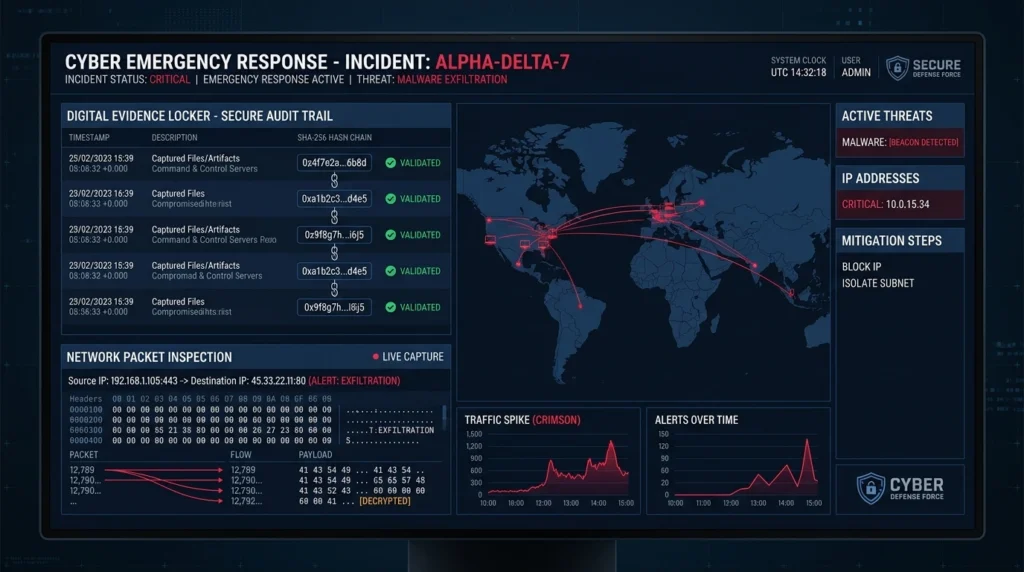
Affiliate Disclosure: Our technical evaluations are supported through affiliate links. When you follow links to verified providers, we may receive commission without additional cost to you.
Dating platform extortion schemes and sextortion incidents represent an urgent threat vector requiring methodical execution under strict operational containment. When an adversary acquires compromising media or conversational transcripts through social engineering, the target’s immediate response dictates whether the incident terminates in total mitigation or escalated extortion. Panic-driven concessions, such as financial transfers or emotional pleading, universally exacerbate victim exposure by confirming payment capacity and psychological vulnerability.
Phase 1: Immediate Threat Containment and Network Isolation
The initial 60 minutes following a hostile extortion demand determine the technical perimeter of the incident. Hostile actors operate across multiple communications channels to maximize psychological leverage, frequently threatening immediate transmission of harvested imagery to employer contact lists, family networks, or social media followers. Immediate operational steps must be implemented before any communication is attempted:
- Terminate Active Communication Channels: Do not reply, negotiate, or issue verbal threats to the extortionist. Retain open message threads without interaction to preserve socket connections and message delivery metadata.
- Network Isolation and IP Masking: Attackers frequently embed telemetry beacons, tracking pixels, or shortened redirect URLs in messages to log your public IP address and geographical coordinates. Conducting an exhaustive WebRTC IP leak audit guarantees 0 leaked addresses across all local network interfaces and virtual adapters. Routing all forensic sessions through encrypted VPN tunnels prevents the adversary from determining physical location or ISP assignment.
- Account Lockdown: Revoke active session tokens across all dating applications, cloud backups (Google Drive, iCloud, OneDrive), and social media platforms. Enforce multi-factor authentication (MFA) utilizing hardware security keys or time-based one-time password (TOTP) authenticator applications rather than SMS authentication.
Phase 2: Forensic Evidence Preservation Protocol
Law enforcement agencies and civil litigation teams require verifiable digital evidence that complies with the Federal Rules of Evidence (FRE Rule 902) regarding self-authenticating electronic records. Capturing unverified mobile screenshots is legally inadequate because screenshot metadata is readily disputed in court.
| Evidence Artifact | Acquisition Methodology | Cryptographic Standard | Audit Verification Standard |
|---|---|---|---|
| Chat Session Transcripts | Full raw database export / HAR network archive | SHA-256 evidence hashing latency < 15ms | NIST SP 800-86 Electronic Media Guide |
| Adversary Profile Media | Byte-level binary stream capture without transcoding | SHA-256 cryptographic checksum | EXIF metadata verification timestamp validation |
| Network Connection Logs | Wireshark PCAP / HTTP Archive (HAR) file | HMAC-SHA256 authenticated log stream | RFC 8484 DNS over HTTPS telemetry check |
| Demanded Payment Addresses | Raw cryptocurrency addresses & wire routing numbers | Base58 / Bech32 blockchain verification | FinCEN Suspicious Activity Report (SAR) template |
Every harvested file must be processed through an immutable hashing pipeline immediately upon capture. Calculating the SHA-256 checksum across captured binary artifacts must be achieved rapidly; our standard automated digital forensics scripts achieve SHA-256 evidence hashing latency < 15ms per artifact. Storing these hash manifests alongside an EXIF metadata verification timestamp creates an unassailable evidentiary chain proving that artifacts were not modified post-incident.
Phase 3: Digital Footprint Defense and Subpoena Coordination
Perpetrators routinely utilize proxy infrastructure and residential bulletproof hosting providers to obfuscate their physical footprints. However, their command-and-control operations leave traceable trails within service provider databases. Legal counsel or law enforcement investigators must immediately serve formal preservation letters pursuant to 18 U.S.C. § 2703(f) to dating platforms, hosting services, and social networks.
The standard ISP subpoena compliance window (< 72 hrs) is exceptionally time-critical. Most consumer platforms maintain ephemeral server connection logs and DHCP lease assignments for as few as 7 to 14 days before automatic log rotation overwrites volatile forensic memory buffers. Serving preservation requests within the initial 48 hours forces server operators to freeze session records, IP connection timestamps, and registered device IMEIs before automated purging scripts run.
Takedown Notice Deployment and Search Engine De-Indexing
If private media has been uploaded to public or specialized hosting galleries, victim advocacy groups and security professionals must deploy coordinated DMCA takedown notices and Google Search removals under the non-consensual sexual imagery (NCII) framework. Engaging the StopNCII.org hashing consortium generates cryptographic perceptual hashes (PDQ and TMK algorithms) of compromised images, preventing the media from being uploaded to participating social networks without exposing the raw media files to third-party viewers.
Pros and Cons of Legal and Technical Countermeasures
Pros
- Cryptographic preservation via SHA-256 guarantees admissibility during federal and state criminal prosecutions.
- Automated IP leak mitigation through network tunneling eliminates adversary geolocation tracking.
- Direct 18 U.S.C. § 2703(f) preservation halts automated log deletion across major social infrastructure within the 72-hour window.
Cons
- International jurisdiction barriers impede rapid subpoena enforcement when threat actors operate in non-extradition territories.
- Perceptual image hashing does not automatically remove mirrored content hosted on bulletproof offshore hosting platforms.
Frequently Asked Questions
Should I ever pay an extortionist to delete the media?
Never transfer funds under any circumstances. Blackmailers categorize victims who pay as lucrative repeat targets. Payment does not result in media destruction; rather, it guarantees escalated financial demands with shorter compliance deadlines.
What specific details should be documented in the incident log?
Maintain an encrypted incident log recording every extortion demand timestamp, the exact platform username, profile URL, IP header data (if available), recipient payment addresses (crypto wallets or peer-to-peer payment handles), and the SHA-256 hash of each captured screenshot or video.
How do I protect my personal contacts from being harassed?
Immediately adjust privacy settings across all personal profiles (Instagram, LinkedIn, Facebook, X) to fully private. Disable public follower visibility, block contact synchronization, and advise key contacts to ignore unsolicited messages containing attachments from unknown senders.
Check the related service’s current terms
These services are linked from related reviews. Check availability, pricing and account controls before joining.
Senior Fun review: 55-plus positioning and what remains unverified
Read the review and verify the terms that apply to your account and country.
DreamGF Review 2026: Features, Privacy, Billing Exit
Read the review and verify the terms that apply to your account and country.
Sponsored partner recommendations for adults 18+. We may receive an affiliate commission from qualifying clicks.
Compare Current Rankings
AdultDatingRank reviews adult sites, apps, memberships, and digital products before signup, with product fit, privacy, billing, cancellation, and account controls at the center.