
Adult-Site Refunds and Chargebacks: Build Cancellation Evidence
 Reviewed byNora ValeSenior UX & Onboarding Auditor
 How to distinguish refunds, reversals and disputes, contact the merchant, preserve proof and protect payment privacy.
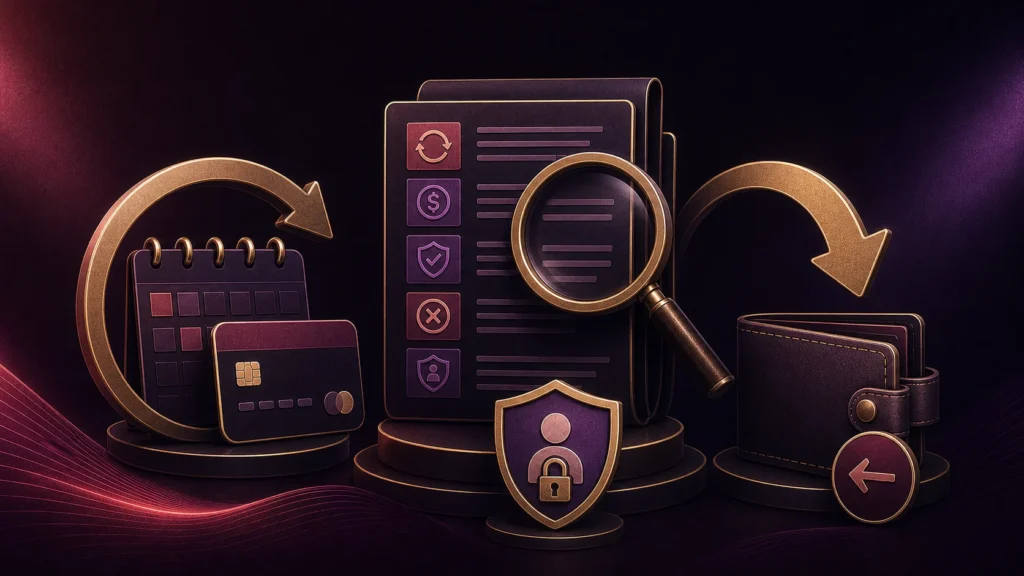
Start with the merchant: identify the exact charge, explain what went wrong and request the remedy supported by the order and policy. Save the checkout, receipt, cancellation confirmation and every support message. If the merchant cannot resolve a genuine billing error, ask the issuer about the formal dispute route and deadline. A chargeback is not a universal refund button and should not replace cancelling a valid subscription.
Refund, reversal and chargeback are different
A merchant refund is initiated by the seller under its policy or agreement. An authorization reversal releases a pending card hold before settlement. A chargeback or billing dispute asks the issuer to investigate a posted transaction under applicable network and legal rules. The correct path depends on whether the charge is pending, duplicated, unauthorized, contrary to the order or simply unwanted after valid access began.
Cancel future renewal first
When a subscription is still active, stop the next renewal through the merchant’s current process. A dispute about one charge may not cancel the contract. Record every base membership, channel, creator plan, supporter membership or other recurring item. Keep the account available until cancellation proof and billing history are secure, then make a separate deletion request if desired.
Build a clean evidence timeline
Use one document with the order date, product, initial term, renewal date, statement descriptor, cancellation request, merchant replies and final account state. Add screenshots that show the page title and date without exposing full card details or passwords. A chronological record is easier for both merchant and issuer to understand than a folder of unlabeled images.
Contact the merchant through an official channel
Open support from the authenticated account or official site. State the remedy requested: cancel future renewal, reverse a duplicate, refund an incorrect package or explain an unfamiliar descriptor. Include the amount, date, account email and last card digits only when needed. Never send a security code, bank password or one-time authentication code.
When an issuer dispute may be appropriate
Examples can include an unauthorized charge, a duplicate, an amount different from the order or a paid service not provided as agreed. Rights vary by country and payment type. The CFPB advises US credit-card users to contact the seller first and explains that some unresolved transactions can be disputed with the card company.
Deadlines matter
Do not wait for several billing cycles while an error remains unexplained. In the United States, CFPB guidance describes a written billing-error notice within a specific period for certain credit-card protections. Debit cards, prepaid cards, other countries and voluntary network processes differ. Ask the issuer for the exact route and preserve proof of when notice was sent.
Do not call every regret fraud
An authorized purchase that disappointed the buyer is not automatically unauthorized. Describe events accurately: whether you approved the order, what the checkout promised, whether access worked and when cancellation occurred. False claims can harm legitimate dispute handling and may breach agreements or law. A strong case uses precise evidence instead of emotionally stronger labels.
Digital-content refund limits
Some policies restrict refunds after streaming, downloads, token use or generated media begins. Read the policy before consuming the product. If the package or renewal differed from the accepted order, document that difference. Do not delete the account until support can identify the purchase, unless safety requires immediate closure.
Crypto refunds
A blockchain transfer lacks a card chargeback. A merchant refund needs a verified return address and supported network. Communicate through the authenticated account, confirm whether fees or exchange changes affect the amount, and never share a seed phrase. The crypto wallet safety guide covers invoice and return-address checks.
Evidence checklist
- Final checkout and accepted terms.
- Receipt, descriptor and transaction reference.
- Cancellation page, email or support ticket.
- Account status and paid-through date.
- Merchant replies and issuer submission proof.
After the dispute
Monitor the account and statement until the result is final. A temporary credit can be reversed if an investigation finds the charge valid. Pay undisputed amounts on time under the issuer’s instructions. If the merchant grants a refund, avoid running duplicate remedies for the same amount and tell the issuer when requested.
Privacy while preserving proof
Store evidence in a protected folder, redact full credentials and disable cloud photo sharing. A receipt can reveal the site, plan and email; a bank screenshot can reveal unrelated finances. Keep only the fields needed to explain the case. After the final statement and any appeal period, remove copies you no longer need.
Related guides
For repeat charges after a card change, read why an expired or replaced card may not end billing. For statement and notification exposure, use the payment privacy matrix.
Methodology and limits
AdultDatingRank reviewed official CFPB billing-error, refund and dispute guidance on 22 July 2026. US examples are clearly labeled and are not legal advice for other regions. The merchant agreement, issuer, card type, network and jurisdiction control the available remedy.
Apply the evidence checklist to a VOD checkout
The sponsored card below is a practical checkout example. It does not promise that a refund or dispute will succeed.
Compare Current Rankings
AdultDatingRank reviews adult sites, apps, memberships, and digital products before signup, with product fit, privacy, billing, cancellation, and account controls at the center.